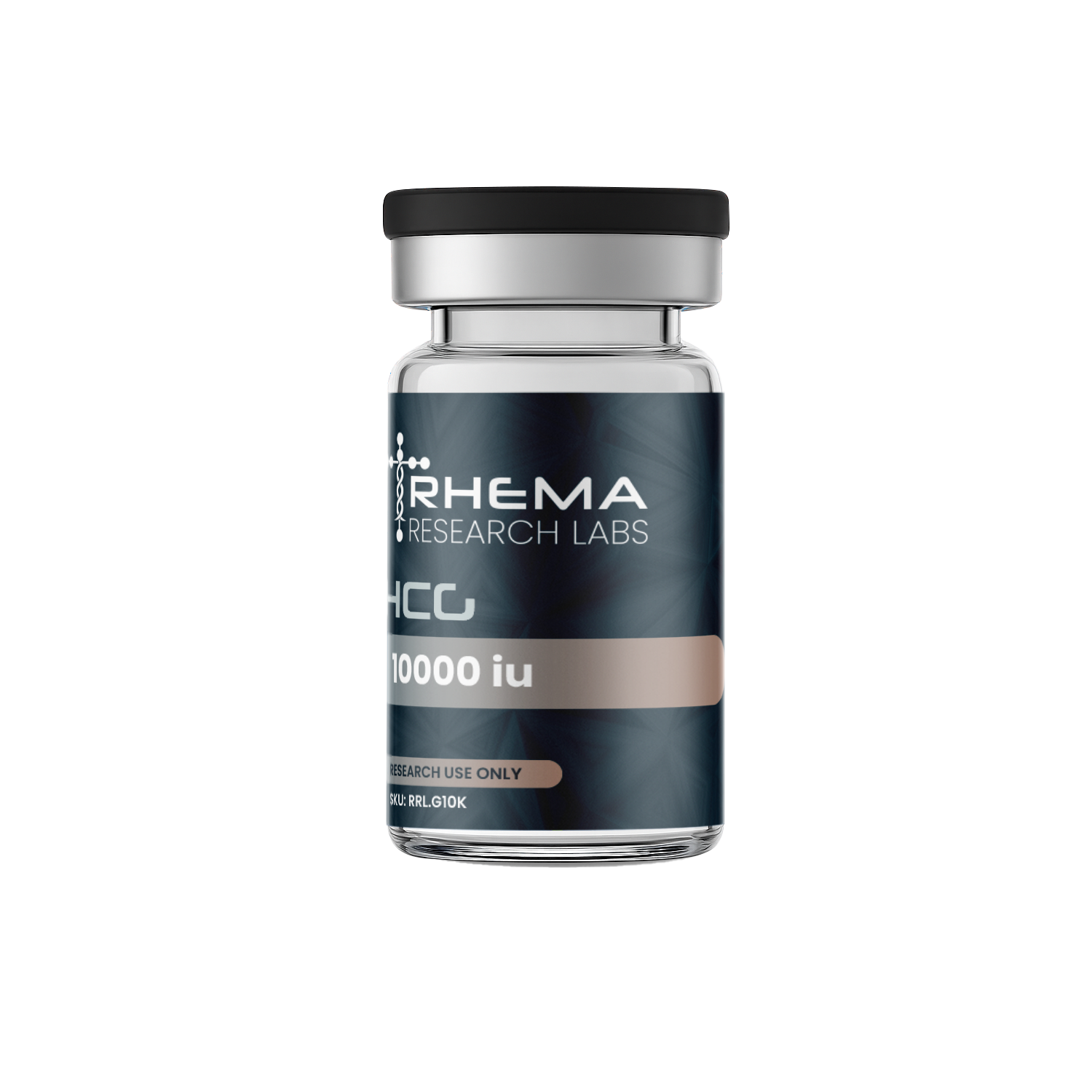
HCG (10,000 iu)
Original price was: $180.00.$125.00Current price is: $125.00.
HCG is a 237-amino-acid LH-analog glycoprotein supplied as a lyophilized research-grade compound, studied in controlled research environments for gonadotropin-axis signaling, LH-receptor binding, and steroidogenesis pathways in research models. For research use only.
Description
HCG (Human Chorionic Gonadotropin) is a 237-amino-acid glycoprotein composed of alpha and beta subunits, structurally similar to luteinizing hormone (LH). Supplied as a lyophilized research-grade compound for use in controlled research environments, it is widely studied in endocrine and reproductive-axis research models for its direct binding affinity to LH receptors.About HCG (10,000 iu)
HCG occurs naturally in placental tissue and has been a foundational compound in endocrine signaling research for decades. As a glycoprotein hormone analog, it provides researchers with a tool for probing gonadotropin-axis signaling, receptor binding kinetics, and downstream hormone-cascade dynamics in research models.What It's Being Studied To Do
- Activate LH receptors directly in research-model gonadal tissue
- Probe steroidogenesis pathways under controlled receptor stimulation
- Investigate gonadotropin-axis feedback dynamics in research models
- Examine receptor-binding kinetics relative to native LH
- Serve as a reference glycoprotein for analytical method development
Why It Matters in Research
The hypothalamic-pituitary-gonadal axis is one of the most studied feedback systems in endocrinology. HCG's specificity for LH receptors makes it a foundational research tool for examining how gonadal tissue responds to direct gonadotropin stimulation in research models.Common Research Pairings
- Kisspeptin — upstream HPG-axis modulator
- Oxytocin — adjunct reproductive-signaling research
- PT-141 — melanocortin-pathway companion
Quick Facts
- Class: LH analog glycoprotein
- Structure: 237 amino acids (alpha + beta subunits)
- Source: Placental glycoprotein
- Dosage form: Lyophilized powder, 10,000 iu per sealed research vial
- Status: Research use only
Additional information
| Weight | 0.0625 lbs |
|---|
Storage Instructions
All products from Rhema Research Labs are manufactured using a lyophilization (freeze-drying) process. This method is designed to maintain product integrity and allows vials to remain stable during shipping for approximately 3–4 months.
Once a vial is reconstituted with bacteriostatic water, it should be stored in the refrigerator to help maintain stability. Under these conditions, reconstituted material is generally considered stable for up to 30 days.
Lyophilization is a dehydration technique in which compounds are frozen and then exposed to low pressure. This causes the water in the vial to sublimate directly from solid to gas, leaving behind a stable, crystalline white structure. This powder can be kept at room temperature until reconstitution.
Upon receipt, products should be stored away from heat and light. For short-term use, refrigeration at approximately 4°C (39°F) is suitable. For long-term storage (several months to years), vials may be placed in a freezer at approximately -80°C (-112°F). Freezing is the preferred method for preserving product stability over extended periods.
⚠️ Important Notice:
These products are intended for research use only. Not for human consumption.
Related products
-
Sale!
-
Sale!
BPC-157
Price range: $45.00 through $105.00Select options This product has multiple variants. The options may be chosen on the product page -
Sale!
DSIP
Price range: $48.00 through $85.00Select options This product has multiple variants. The options may be chosen on the product page